Hot Tarte Tatin with Vanilla Ice Cream
Dark caramel, fallen apple, cold cream against cast iron
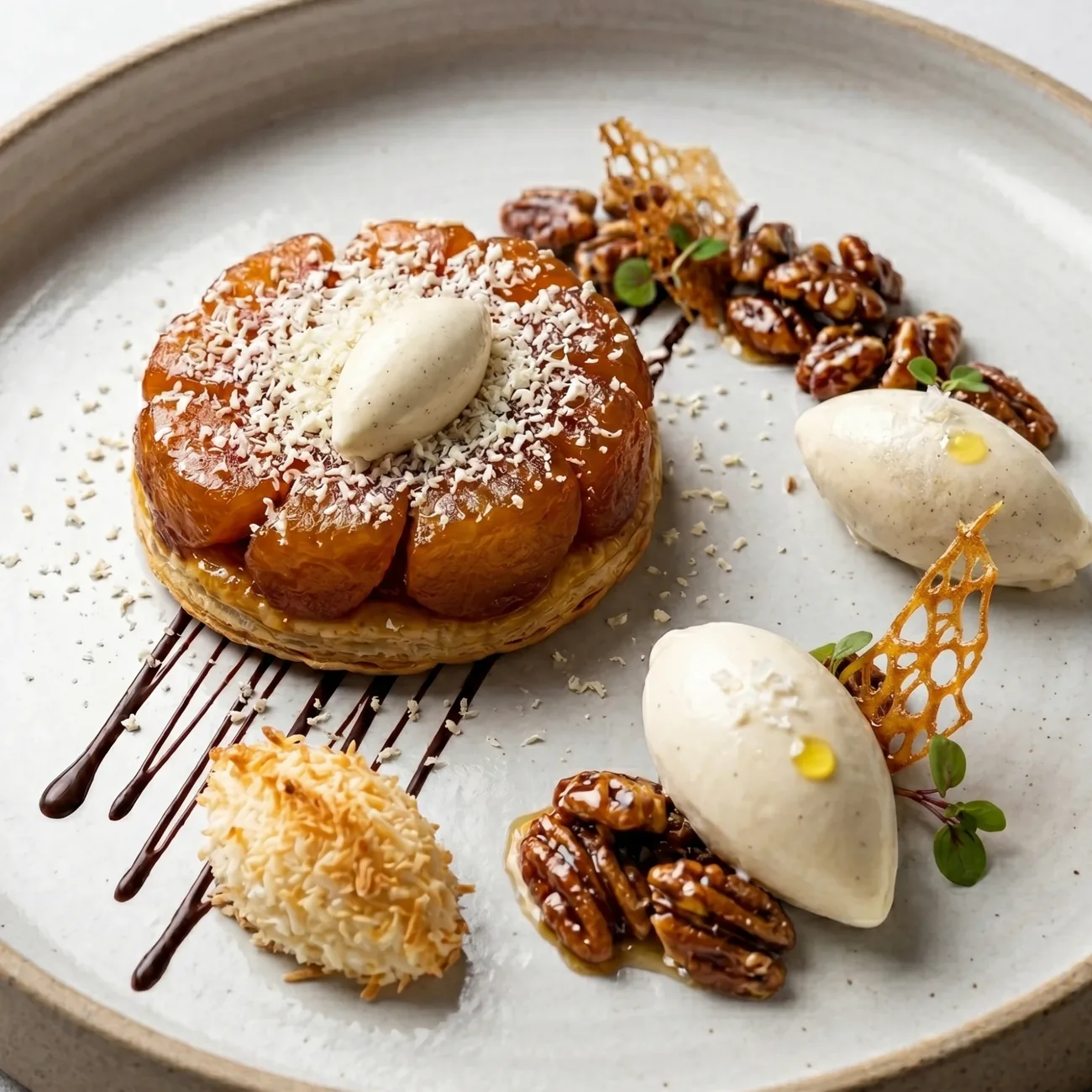
This dish is not finished in the kitchen. It is finished at the table, in front of the people eating it — and the last thing to touch it is a thread of bitter olive oil, not sugar.
01 · Flavor architecture
02 · Time breakdown
Stage detail
| Stage | Clock time | Active? | Note |
|---|---|---|---|
| Build caramel base | 8–10 min | Yes | Watchful attention only — do not stir |
| Arrange apples in caramel | 5 min | Yes | Pack tightly — they shrink |
| Cover with pastry | 3 min | Yes | |
| Bake in oven | 25–30 min | No | Serve Course 1 and cook Course 2 during this time |
| Rest before inversion | 2 min | Yes | Not longer — it stiffens |
| Inversion at table | 1 min | Yes | The moment |
| Total active | ~25 min | ||
| Total clock | ~55 min |
03 · Ingredients
- unsalted butter, cold and cubed80g
- caster sugar100g
- Pinch of flaky salt
- firm apples (Braeburn or Cox for flavour depth; Granny Smith for acid firmness; avoid anything that collapses to mush — Golden Delicious, for instance, is not an option)4–5
- Juice of ½ lemon (stops oxidation; also adds acid to the caramel)
- all-butter puff pastry (if pre-made, keep it cold until the last moment — warm pastry does not puff)1 sheet
- Or: 150g plain flour, 100g cold butter, pinch of salt, 60ml ice water — make a rough pâte feuilletée in 10 minutes if you have time
- Good vanilla ice cream — not vanilla flavoured, not low-fat. Dense, cold, real vanilla.
- genuinely bitter extra virgin olive oil (a grassy, peppery Greek or Tuscan oil — the bitterness is the point, not a background note)1 tbsp
04 · Technique
Build the caramel without stirring
Use a 20–22cm ovenproof pan — cast iron is ideal. Put the sugar in a single even layer over medium heat. Leave it. Do not stir. The edges will begin to liquefy and colour first. When about half has melted, you may tilt the pan gently to move unmelted sugar toward the heat. As the sugar reaches amber — the colour of dark honey, not pale gold — add the butter in three additions. It will foam violently. Stir it in quickly with a heatproof spatula. The caramel will try to seize; keep stirring. Add the salt. You want dark amber: this is the stage most people pull back from because it looks like it's going wrong. It isn't. A pale caramel tarte tatin tastes of sweetness. A dark one tastes of bitterness, complexity, almost burnt toffee. Aim for the second. The caramel continues to cook in residual heat — pull it at dark amber before it crosses to acrid black.
Pack the apples
Peel, core, and quarter the apples. Toss with lemon juice. Pack them standing upright in concentric circles in the caramel — tightly, firmly. They will shrink by 20–30% in the oven. If you leave gaps now, they will be chasms after baking. Fill every space. Add any stray pieces on top.
Pastry lid
Preheat oven to 190°C. Roll the puff pastry to roughly the diameter of your pan plus 2cm. Lay it over the apples. Tuck the excess down around the inside edges of the pan — this creates the rim of the tarte when inverted. Pierce the pastry once or twice in the centre with a knife tip (steam escape). No egg wash — the pastry will brown from the caramel vapour.
Bake
25–30 minutes at 190°C until the pastry is deep golden and sounds hollow when tapped. The caramel should be visible bubbling at the edges of the pan. Remove and rest 2 minutes on a wire rack — not longer, or the caramel will set against the pan and the inversion becomes a fight.
05 · Why it works
The tarte tatin was invented by the Tatin sisters as a mistake — a recovered mistake, but a mistake nonetheless, which is why it belongs in this book. The magic of the inversion is purely physical: the caramel, which has been cooking in the bottom of the pan throughout the oven time, is now on top, and gravity pulls it slowly through the warm apple as the tarte is carried to the table. The pastry shatters because lamination is steam engineering — each thin layer of cold butter vaporises in the oven and forces the flour sheets apart, while the sugar, pushed past 170°C, breaks down into the bitter caramelisation compounds that give dark caramel its edge over pale. The olive oil belongs on this plate because its polyphenol bitterness sits in the same register as that dark caramel — bitter meeting bitter from two different worlds, fruit against fire — while the fat in the ice cream rounds both, and the temperature collision — caramel at 70°C, ice cream at -4°C — is the thermal logic of the entire three-course menu in one bite.
06 · Texture map
07 · Plating
This dish is plated at the table. Bring the pan to the table. Place a large plate face-down on the pan — the plate should be 4–5cm larger than the pan diameter all around. Announce nothing. Hold the pan and plate together firmly, thumbs beneath the pan handle, fingers spread across the plate back. Invert in one committed motion — fast, not tentative. Set the plate on the table. The pan sits on top for 3–4 seconds — this allows the caramel to settle from the pan onto the tarte. Lift the pan straight up. Do not drag it. The reveal: the apples should be deep amber-caramel, glossy, arranged in their concentric circles. The caramel will continue to move slightly — it is still liquid. Wait. Let it settle. Now the heresy: draw a thin thread of the bitter olive oil across the hot caramel surface, one pass, corner to corner — it will bead and split against the sugar rather than blend, green against amber. Then, and only then, place a scoop of vanilla ice cream at the 12 o'clock position of the tarte. Not in the centre — beside the centre. Say nothing. Let the caramel reach the ice cream in its own time.
08 · The moment
This is a Reveal, followed immediately by a Collision. The inversion is the Reveal — commit to it, it cannot be undone once begun, and hesitation produces a ruined tart and a story you'd rather not tell. The Collision is the ice cream placed on the still-hot surface: the sound of the ice cream beginning to melt against the dark caramel should be audible in a quiet room. This is a two-stage moment. Stage the Reveal first. Pause. Then the Collision. The sequence matters.
09 · Chef's notes
If something goes wrong
Caramel seized and went grainy: you stirred too early, or there was moisture contamination. Restart with a clean pan — seized caramel cannot be rescued by adding more butter. Apple pieces stuck to the pan on inversion: the tarte rested too long before inverting, or the pan was not hot enough (caramel sets faster in thin pans). If pieces stay in the pan, lift them out with a spoon and press them back into place on the tarte — the caramel will conceal the repair. Pastry not properly cooked at base: return the inverted tarte to the oven (on the plate, directly) for 5 minutes at 200°C. Do not tell anyone.
Substitutions
Puff pastry → shortcrust (denser, less dramatic; the shatter of puff is part of the contrast structure — shortcrust produces a more uniform soft texture; the tarte still works but loses the textural heresy of shattered pastry against collapsed apple). Vanilla ice cream → crème fraîche at room temperature (less dramatic collision, more creamy richness — acceptable but the theatre of the temperature difference is diminished). Skipping the olive oil thread → the tarte reads sweeter and more classical; you lose the bitter counter-thread that keeps the dark caramel from settling into ordinary dessert sweetness. If you must skip it, push the caramel a shade darker to compensate.
Menu coordination (Ch 1)
Part of the "Seduction by Apple" three-course menu. This goes in the oven at the same time as the duck renders — it bakes while you're serving Course 1 and cooking Course 2. The inversion happens at the table; the oil and ice cream go on after the reveal.
Scaling
Double the quantities for a larger pan (24–26cm). The bake time increases by 5–8 minutes. Everything else scales directly. Do not make two small tartes for a dinner party — one large one and the theatrical inversion is the correct choice.
Vegetarian / Omnivore variant
This dish is vegetarian by nature. It contains butter and the optional ice cream is dairy — nothing to change. Vegan: replace butter in caramel with coconut oil (the flavour is subtler and you lose the dairy richness, but the caramelisation still works); use coconut ice cream (loses the clean dairy quality, gains tropical notes — acceptable but not the same dish).
10 · Drink pairing
Sauternes
the botrytised richness and honey notes echo the dark caramel while the acidity cuts the butter. If not: a demi-sec Vouvray.
Calvados
Normandy apple brandy, served in a small glass at room temperature alongside the tarte. The apple in the glass mirrors the apple on the plate; the brandy's warmth extends the caramel.
Strong black coffee, unsweetened
the bitterness of a good espresso or French press coffee is the ideal counterweight to the caramel. Serve it in the same moment as the ice cream, not after.